
Powering your digital workforce of patient access AI co-workers.
.avif)



Whether you use our AI co-workers, our partners’, or your own, HCAF is purpose-built for patient access, integrated natively with your EHR and contact center, and trained on 400 million real-life patient interactions a year.
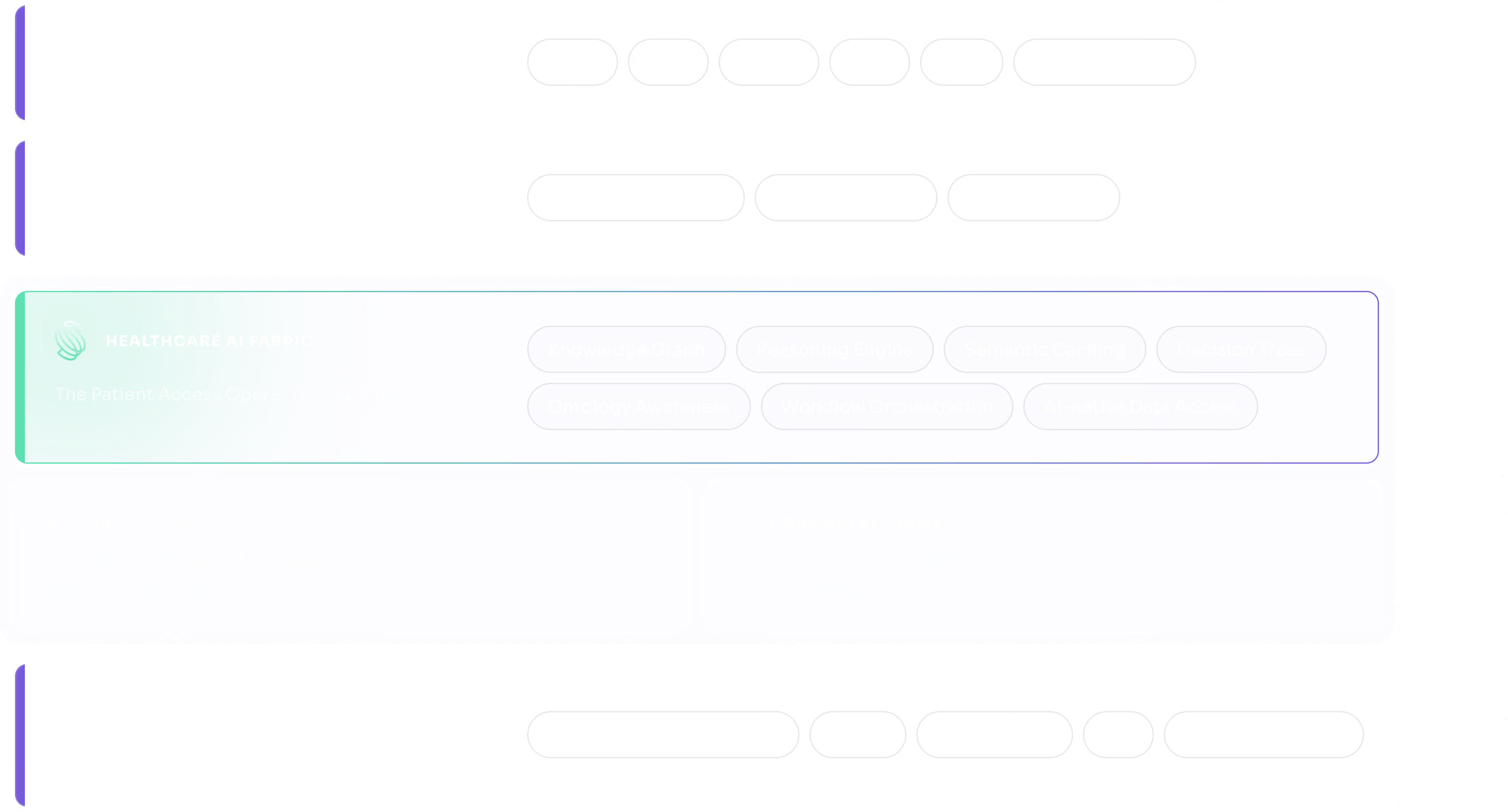

Understanding HCAF: The Patient Access Operating System

A patient access knowledge graph combines domain-specific ontology, EHR and journey data to maintain a longitudinal view of each patient across interactions.

Plans, decides, and orchestrates multi-step,
disconnected, non-deterministic patient interactions over time. Reasons like your best human agent.

Keeps track of all prior interactions so co-workers can continue complex patient conversations without accessing the LLM at every turn.

Operationalizes decision trees stored in your EHR so that the AI agents follow the exact paths you have designed over years of operations.

Runs natively with Cisco, Zoom, NICE, Avaya, and the platforms your contact center already uses.

Makes data buried inside the EHR natively accessible by AI agents through the patient access knowledge graph.

HIPAA, SOC 2 Type II, and PCI are part of the architecture, not policies layered on top. PHI stays inside your perimeter.
Why our AI co-workers are unique
Healthcare-grade and designed from the ground up, not bolted on.

They learn from millions of real patient interactions across health systems, so they understand how patient access actually works.

On the interactions that matter, co-workers respond instantly. Semantic caching keeps conversations moving without unnecessary delays.

Responses are grounded in the EHR, payer data, pharmacy data, and knowledge graph, so answers come from trusted sources.

.avif)
Faster access for patients. Less friction for your teams. More growth for your health system.
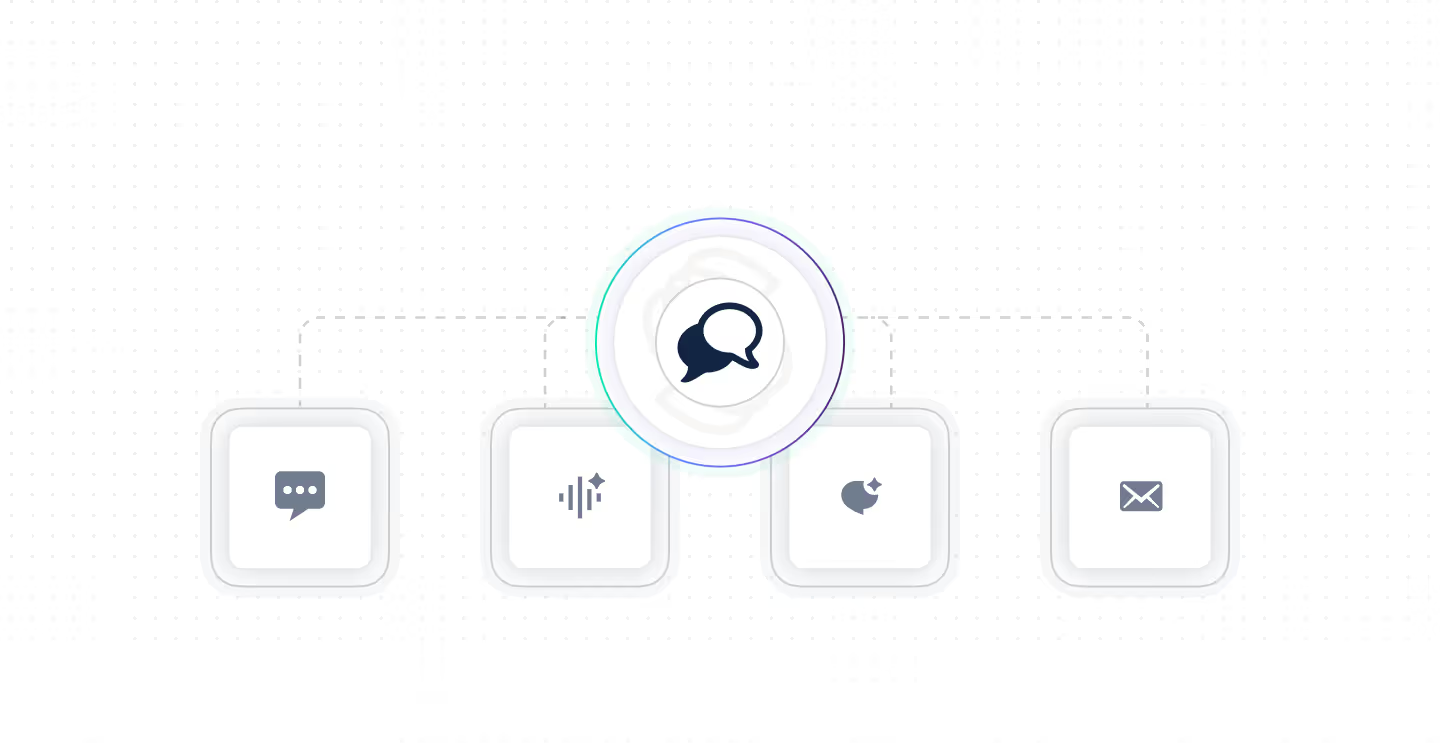
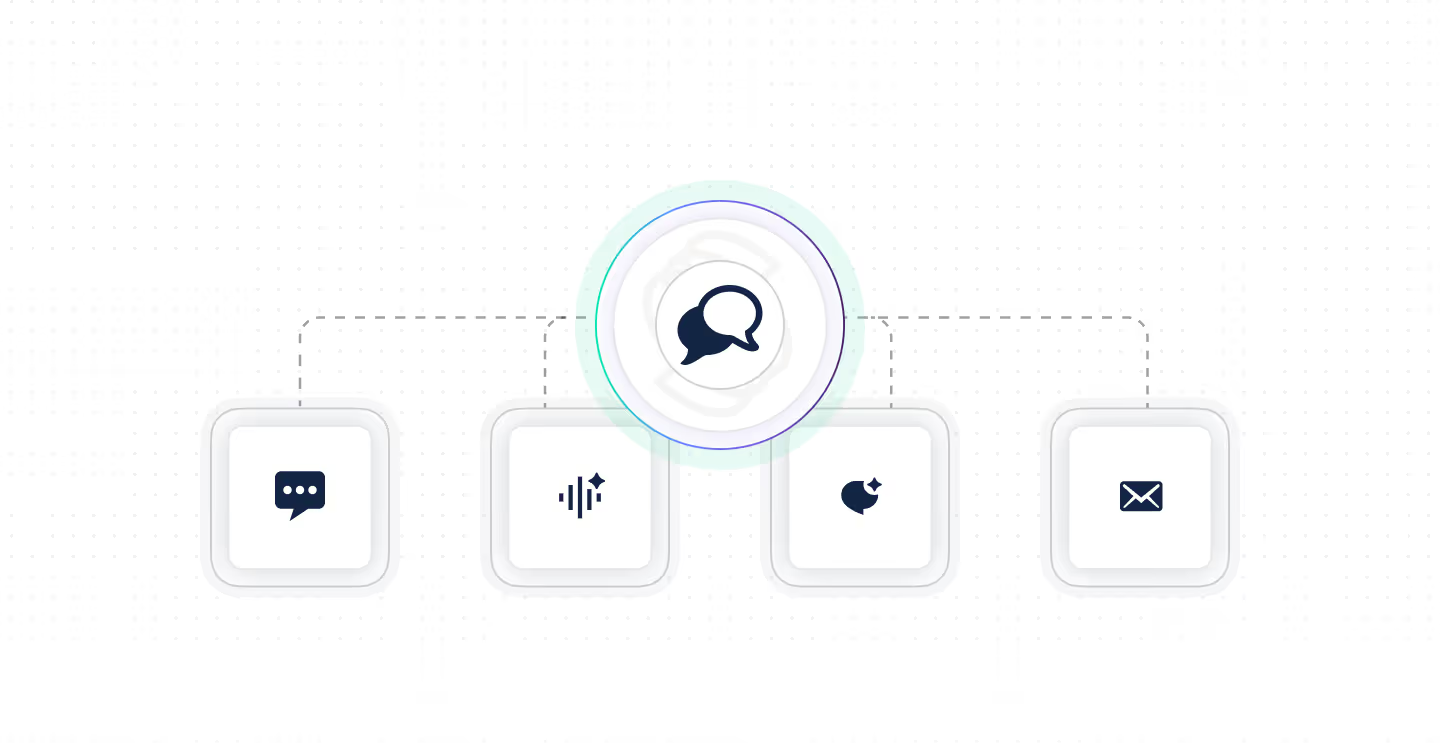
Meet your patients exactly where they are. Modernize your digital front door to support patients with an efficient, reliable experience across phone calls, SMS, chat, and email.
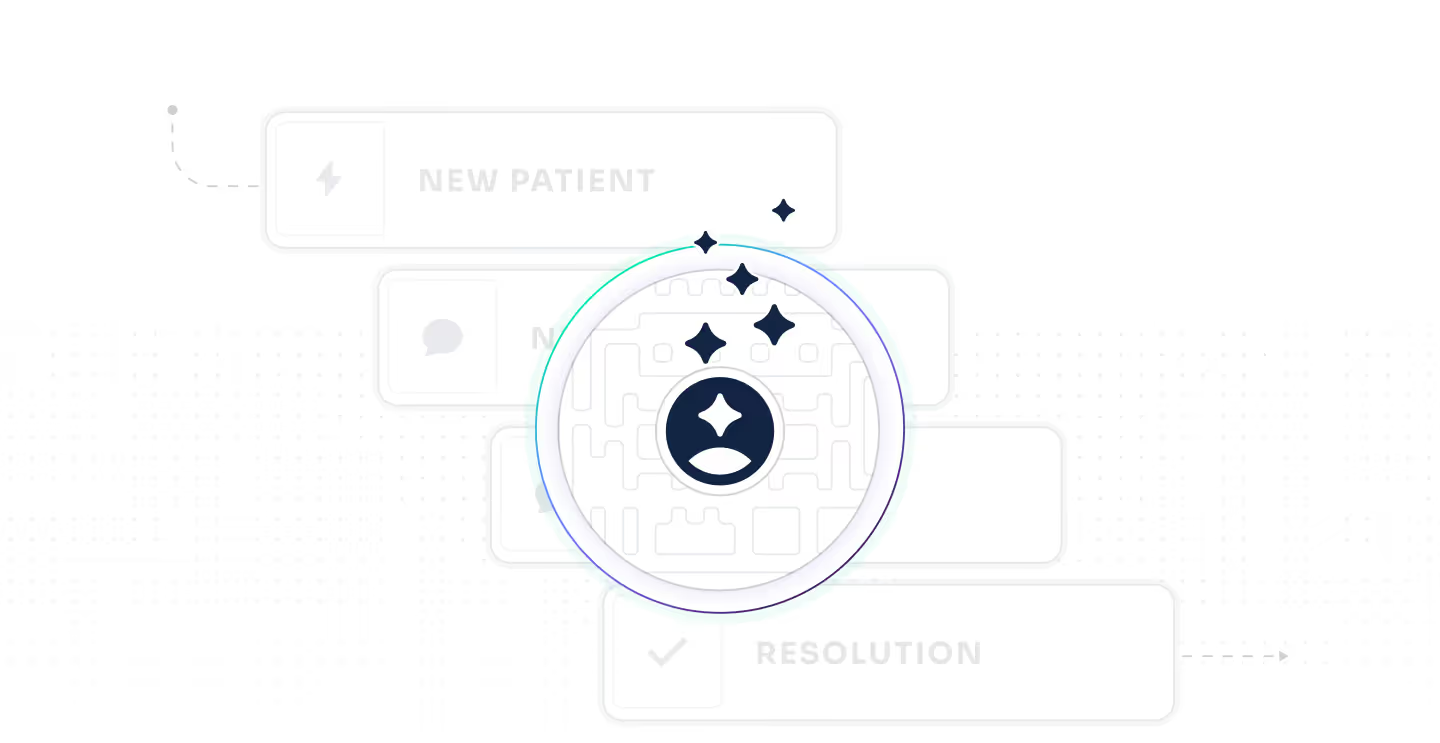
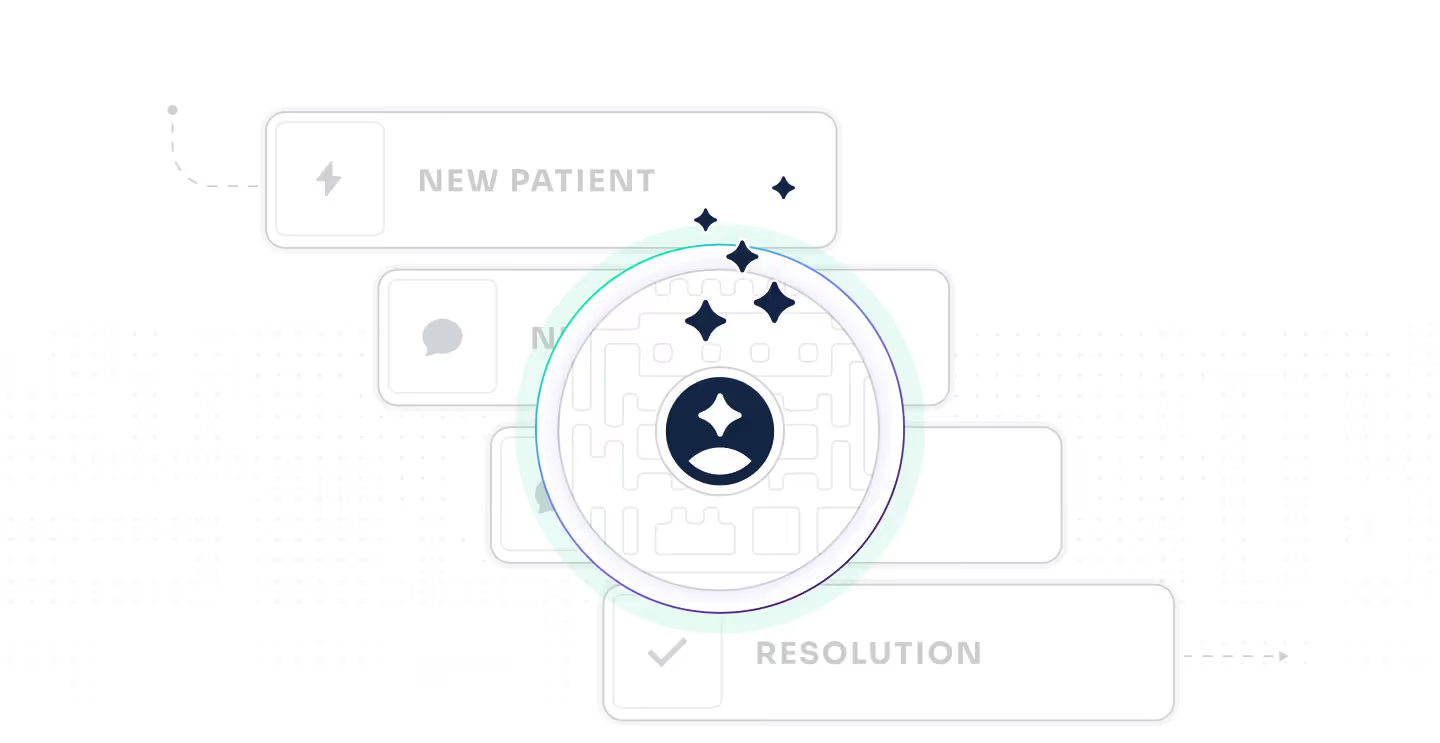
AI agents that reason, act, and resolve, without human escalation. They own the entire workflow, from the first patient interaction to resolution, automating scheduling, billing, referrals, pharmacy, and more.
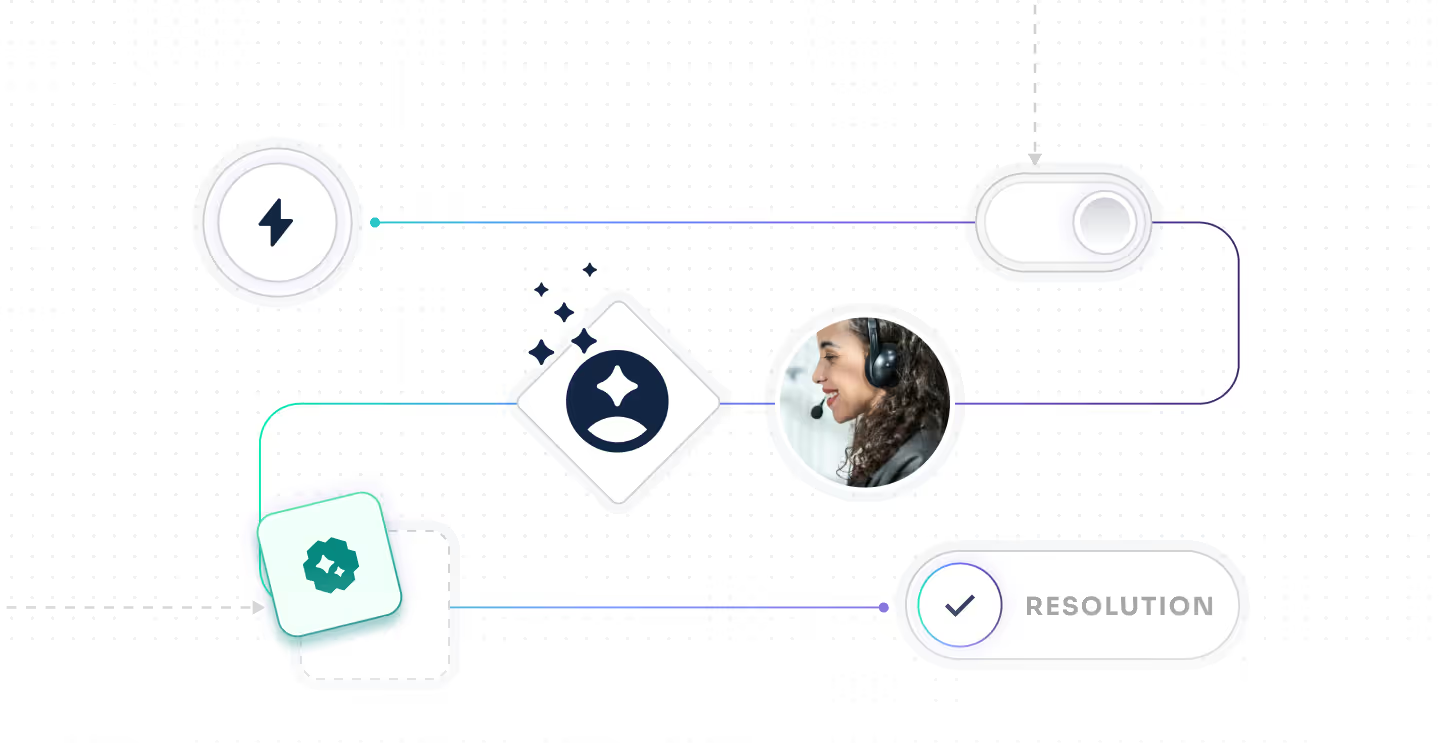
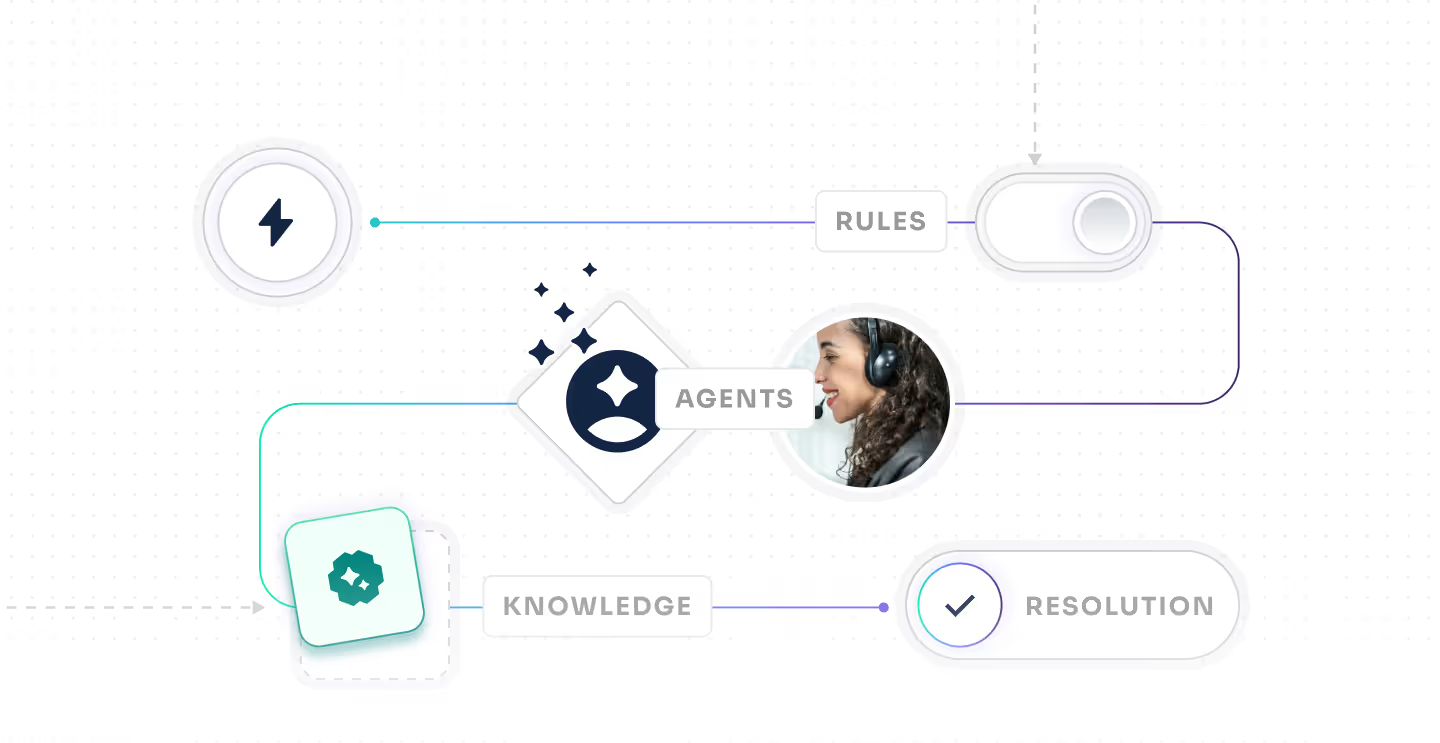
Turn operational knowledge and rules into intelligence to drive every patient interaction. Whether human-led, automated, or hybrid, confidently execute workflows with consistency and speed.
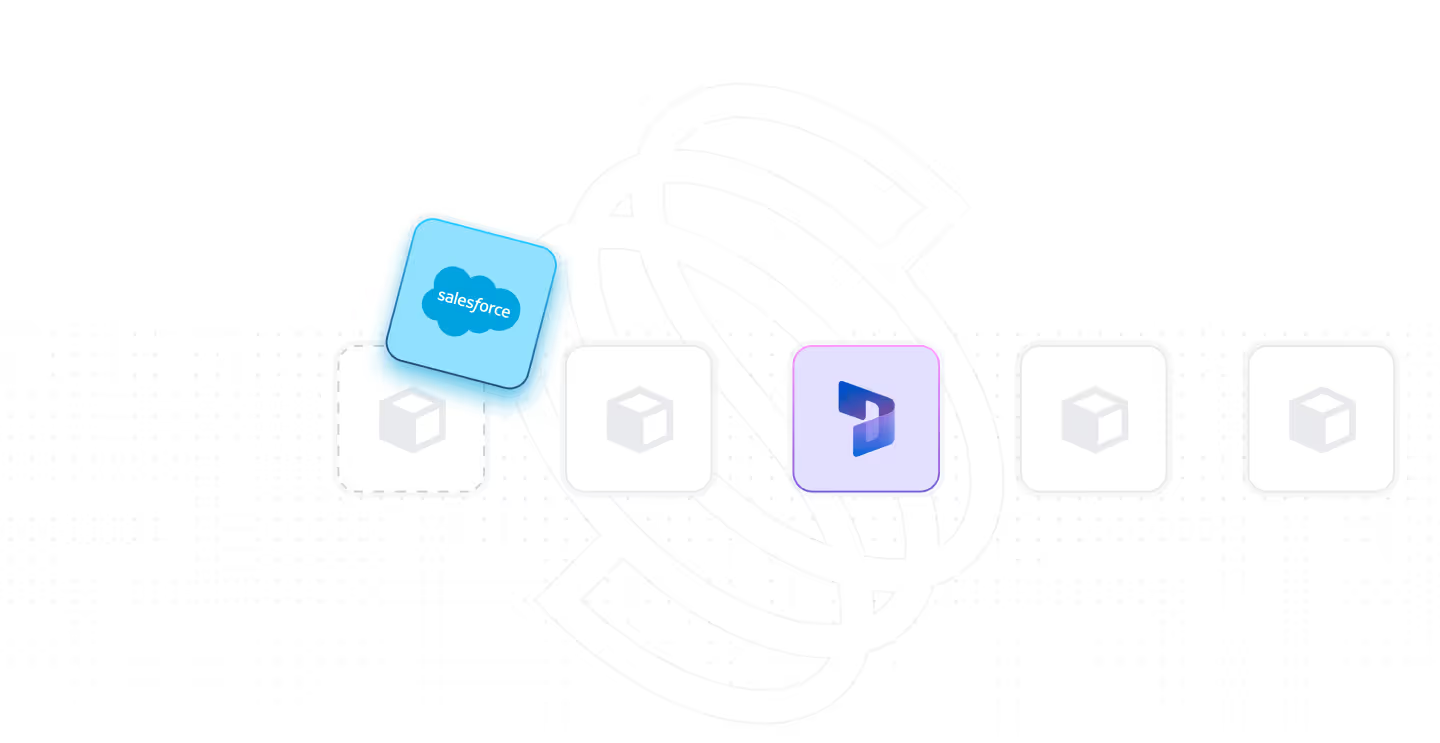
Seamlessly integrate your existing tech stack. Natively connects with EHR, telephony, and contact center systems to deliver personalized patient experiences, increase staff productivity, and reduce administrative burden.
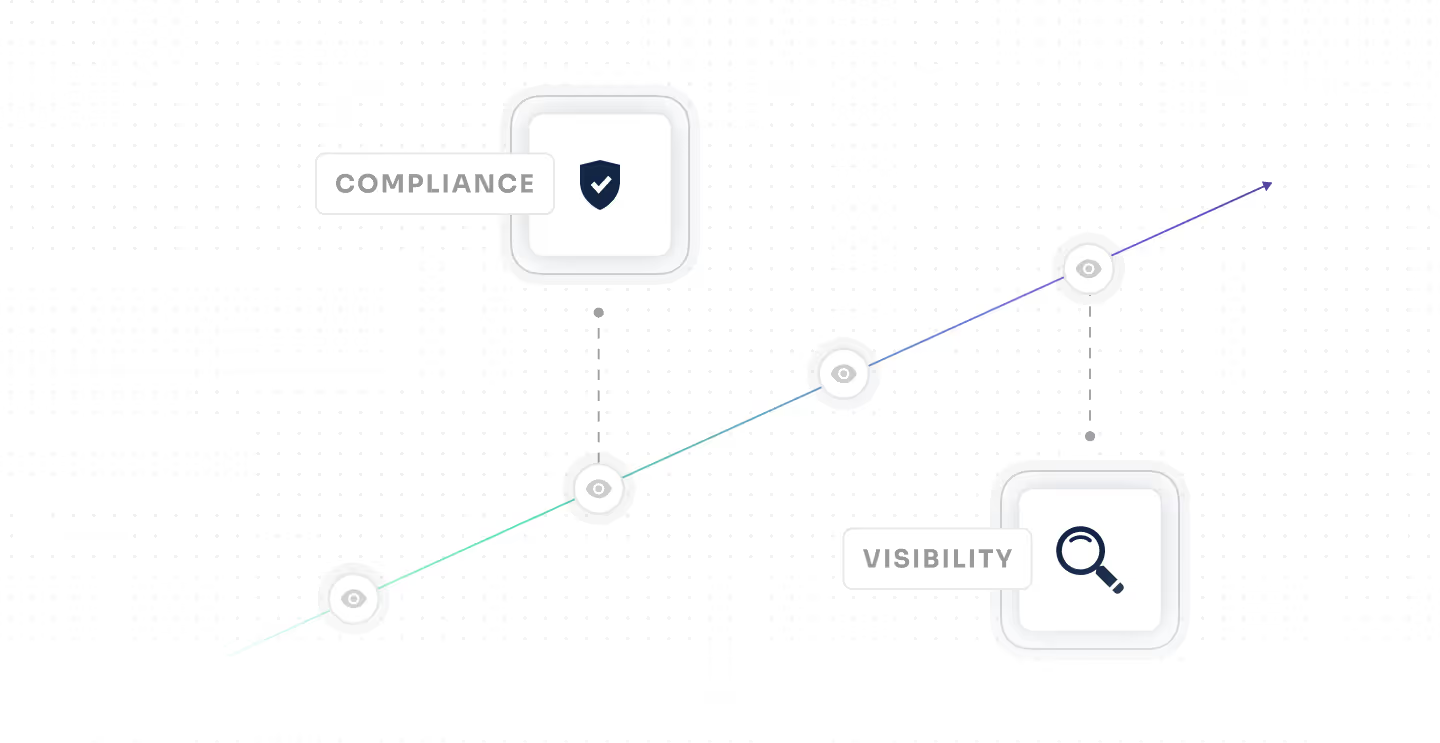
Designed for trust at scale, our platform embeds guardrails, system reliability, and deep observability into every workflow. Operate confidently while maintaining transparency and control.

Privacy. Patient information is safeguarded by following strict healthcare privacy standards, limiting access, and honoring consent.

Security. We protect your data with strong encryption, secure infrastructure, continuous monitoring, and proven safeguards.

Access. Our secure authentication, role-based access, and strict permission controls ensure only the right people can interact with sensitive systems and data.

Compliance. We meet leading industry standards and regulations through regular audits, strong controls, and transparent reporting.
Get the Latest Insights from our team
%20(10)%20(1).avif)
.svg)
What is an AI Front Door for Healthcare Systems?
.svg)
AI Agents in Healthcare: What CIOs Need to Know
How AI agents are transforming patient access, reducing costs, and helping health systems serve more patients.
%20(16)%20(1).avif)


.svg)
Ready to get started?
Learn why leading health systems are tapping into the power of the SpinSci AI platform for patient access.

Frequently Asked Questions
The Healthcare AI Fabric (HCAF) is the proprietary platform that powers every SpinSci AI agent. It extracts your EHR's decision logic, ingests the unstructured data your health system runs on every day, and converts all of it into an AI-ready foundation that drives modern, automated patient access workflows. It is not a product you deploy on its own. It is what makes SpinSci's AI agents smarter and more capable than anything built on a generic platform.
Patient access automation uses AI agents to handle interactions between a health system and its patients across every channel. Inbound, AI agents handle voice calls autonomously, managing scheduling, billing, prescriptions, and referrals without hold times or staff involvement. When a human is needed, AI works alongside contact center agents in real time so staff can resolve calls faster. Outbound, AI agents run proactive campaigns across voice, text, and email to reduce no-shows, recover unfilled prescriptions, convert referrals, and collect more revenue.
An AI agent is software that can reason, make decisions, and complete tasks autonomously on behalf of a user. That's fundamentally different from a chatbot, which follows a fixed script and typically hands off or fails when the conversation goes off-script. The practical difference shows up in outcomes: a chatbot might confirm an appointment exists, an AI agent can reschedule it, update the record, and end the call resolved.
A healthcare AI platform is the foundational layer of technology that powers AI inside a health system. It's not a single application or chatbot. It's the intelligence layer underneath the tools your staff and patients actually interact with, responsible for ingesting data, applying healthcare-specific reasoning, and orchestrating AI agents to complete work across voice, digital, and human touchpoints.
General-purpose AI is trained on broad knowledge and can approximate answers about healthcare, but it doesn't know your health system's specific workflows, your EHR's decision logic, or your patients' histories. Healthcare AI that's actually fit for patient access is trained on and integrated with EHR platforms like Epic, contact center systems, scheduling logic, billing rules, and more.
Yes. SpinSci's AI agents integrate natively with Epic, Oracle Health, and athenahealth, the platforms that power the majority of large health systems in the US. This matters because the EHR is where patient data lives: schedules, insurance, prescriptions, referrals, billing history. An AI agent that isn't connected to your EHR can only have a conversation. An AI agent that is connected can actually complete the task, scheduling an appointment, processing a refill request, updating a record, without a staff member ever touching it.
Three things need to be true before AI agents can work reliably in healthcare. First, the data has to be cleaned, vectorized, and structured for AI reasoning. Second, the health system's decision logic, the rules that govern how workflows like scheduling, referrals, and billing actually run, has to be built into the model. Third, the AI has to be integrated natively with the EHR and contact center. Skip any of these and the agents will either fail or behave like a generic bot, not a trained staff member.
Most healthcare AI is built on general-purpose models that weren't designed for healthcare workflows. They get bolted onto health systems without solving the underlying data problem: EHR data is messy, inconsistent, and structured in ways that AI can't reason over without significant preprocessing. When the data isn't AI-ready, the agents aren't reliable. The health systems seeing real results are the ones that start with an intelligence layer that operationalizes the data first.
Compliance is built into the architecture, not layered on as policy. HIPAA, SOC 2 Type II, and PCI are part of how the fabric is constructed. Your protected health information stays inside your perimeter and does not leave your control.
HCAF runs natively with the systems you already operate. On the EHR side that includes Epic, Oracle Health, Athenahealth, MEDITECH, eClinicalWorks, Veradigm, and NextGen. On the contact center side it runs with Cisco, NICE, Amazon Connect, Zoom, Avaya, Five9, Mitel, and RingCentral. These are not add-ons bolted on later. The integrations are part of the foundation, which is why data buried inside the EHR becomes accessible to AI co-workers through the knowledge graph.