
Patient notification ai
Improve engagement, one message at a time.

Outbound notification campaigns that drive efficiency and revenue
Health systems spend significant time and resources managing patient outreach, but the process is typically slow, manual, and fragmented. SpinSci's AI agents keep patients informed and engaged automatically, so nothing slips through the cracks.

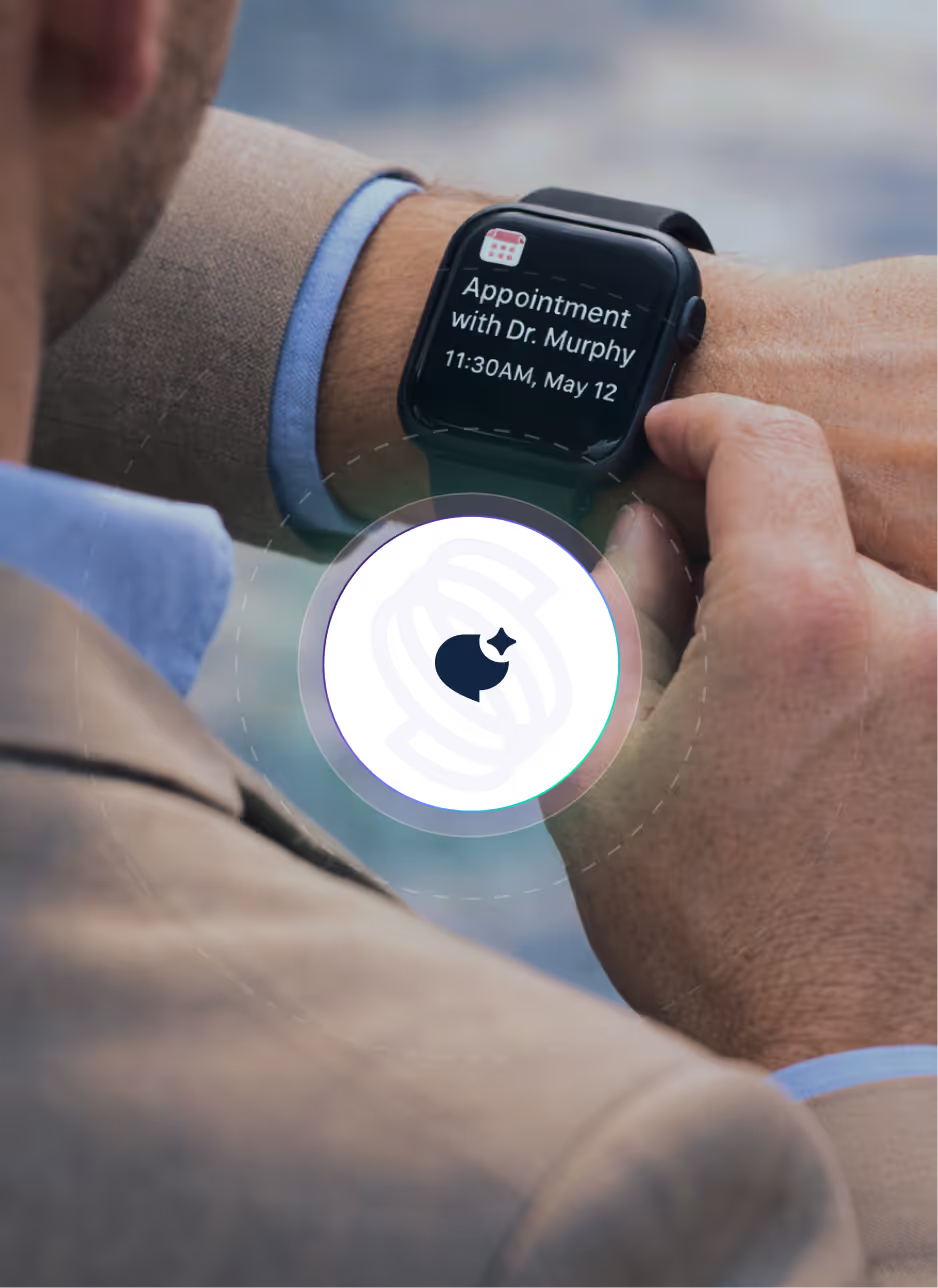
Get more patients in the door and keep clinician schedules full with automated appointment reminders.

Drive referral conversions, prescription refills, bill payments, and follow-up appointments.

Keep inbound call volumes low and reduce manual effort by automating proactive communication across the patient journey.




Assists patients with billing inquiries, payment questions, and balance resolution.
Key Capabilities

Use real-time EHR patient and event data to trigger automatic notifications. Get the right info about appointments, refills, billing, and referrals in front of patients at precisely the right time.

Engage with patients through the channels they prefer. Connect via voice, text and email to drive more appointments, ensure procedure preparedness, and prompt payments.

Design and execute outbound campaigns tailored to your specific preferences and workflows. Achieve targeted, consistent outreach at scale, keeping patients engaged and informed.

Tap into operational reporting and analytics to understand patient response rates, no-show correlation, and conversion trends. Track effectiveness and optimize your communication strategy.
Real results, in their words.
"Automating the patient verification process has saved us 40-50 seconds on average per interaction. The value add there is a huge time savings across our volume of calls."
.avif)










Check out our latest resources to learn more.
%20(12)%20(1).avif)
.svg)
How Health Systems Reduce Patient No-Shows with AI
%20(6)%20(1).avif)
The Ultimate Guide to Patient Outreach Automation for Health Systems
How leading health systems use proactive communications to improve access, revenue, and outcomes.
%20(19)%20(1).avif)
.svg)
Increasing Referral and Appointment Conversion with Proactive Patient Outreach
See how Patient Notify helped increase referral conversion and capture more appointments.
.svg)
See SpinSci in action
Let our experts show you the power of outbound patient communications.

Frequently Asked Questions
Patient engagement is the degree to which patients are active, informed participants in their own care. In practical terms, it means patients keep their appointments, fill their prescriptions, follow through on referrals, pay their bills, and stay connected to their care team over time. Health systems with high patient engagement see better clinical outcomes, lower no-show rates, stronger revenue, and higher patient satisfaction. The challenge is that engagement does not happen on its own. It requires consistent, timely, personalized communication that meets patients where they are.
Most patients do not disengage intentionally. They forget appointments, lose track of refills, or do not know their next step after a referral. Patient notifications close that gap. A well-timed reminder keeps an appointment on a patient's calendar. A refill prompt keeps them on their medication. A billing notice gets a payment before it enters collections. For health systems, these small interventions compound into significant outcomes: lower no-show rates, higher revenue capture, better adherence, and patients who stay in the system rather than drifting to a competitor.
Proactive patient outreach means reaching patients before a problem occurs, rather than waiting for them to call in. Instead of reacting to missed appointments or lapsed prescriptions after the fact, health systems reach out in advance to give patients everything they need to act. Proactive outreach covers appointment reminders and rescheduling, prescription refill nudges, referral follow-up, billing communications, and preventive care campaigns. It shifts the burden of follow-through from the patient to the health system, and it pays off in fewer gaps in care and more revenue captured.
No-shows happen when patients forget, get confused, or find it too difficult to reschedule. A timely reminder solves the forgetting problem. A two-way reminder, where a patient can confirm, cancel, or reschedule in the same interaction, solves all three. When a patient cancels, the slot can be immediately offered to another patient. Health systems that run consistent, two-way appointment reminder campaigns see significant reductions in no-show rates, recovering clinical capacity and the revenue that comes with it.
Personalization at scale requires real-time access to patient data, which is exactly what SpinSci's AI agents have. By integrating natively with the EHR, the agents know which patients have upcoming appointments, lapsing prescriptions, open referrals, or outstanding balances, and they tailor every outreach communication to the individual patient's situation. No generic blasts. No irrelevant messages. Each patient receives outreach that is specific to where they are in their care journey, delivered on the channel they are most likely to respond to.
EHR-triggered patient notifications are outreach communications that fire automatically based on real-time events or data changes in the electronic health record. When a provider issues a referral, an appointment is scheduled, a prescription is ready, or a balance becomes due, the EHR event triggers a notification to the patient without any manual staff action required. SpinSci is integrated natively with Epic, Oracle Health, and other major EHR platforms, meaning triggers are real-time and accurate, not based on scheduled data exports or batch syncs.
Health systems that run consistent, well-executed patient notification programs see measurable improvements across every metric that matters: lower no-show rates, higher prescription refill and adherence rates, stronger referral-to-appointment conversion, and more revenue recovered through billing outreach. These outcomes compound over time. A patient who keeps their appointment, fills their prescription, and pays their bill is a patient who stays in the system, returns for future care, and refers others.
Patient notification AI agents pull real-time data from the EHR to identify which patients need to act, then initiate personalized outreach across voice, SMS, or email automatically. When a patient responds, the agent completes the workflow end-to-end, whether that means rescheduling an appointment, processing a refill, or collecting a payment, and writes the outcome back to the EHR. If the interaction needs a live staff member, the agent escalates with full context already in hand.